The NHSU’s new website: rethinking Ukraine’s main medical portal
Government digital services serve millions of people every day. Any confusion in their logic or complex interactions can result in user loss of time and health.
The website of the National Health Service of Ukraine is one of the critical resources. On it, patients look for information about free medical services; medical institutions check cooperation terms of cooperation with the state; and the media access official data and news. That’s why the NHSU website update was not just a redesign—it was a comprehensive rethink of the role of the state portal in the digital environment. This project was implemented with the support of the "100% Life" Charitable Organization, the largest patient organization, which acted as a development partner. Beyond funding, "100% Life" also brought expertise that helped us create a convenient service search module for patients.
Our team at CF.Digital was responsible for creating a convenient, intuitive experience for each user group. The website was designed to evolve from an information portal into a full-fledged communication tool between the state, medical institutions, and patients.
What needed to be changed?
The main problem with the project was that the old NHSU website had ceased to fulfil its main function — to be a guide — and had become outdated both conceptually and technically, no longer meeting modern requirements in terms of either content or form. The core issue was the difficulty of accessing important information: users struggled to find key information quickly find the data they needed, and the structure did not take into account the diversity of visitor categories and could not provide them with easy access to data.
Together with the customer, our team identified several systemic problems:
Information overload
Different user groups — patients, healthcare providers, partners, and the media — had fundamentally different needs, but received the same content, which wasn’t structured or tailored to their needs.
Limited handling of dynamic data
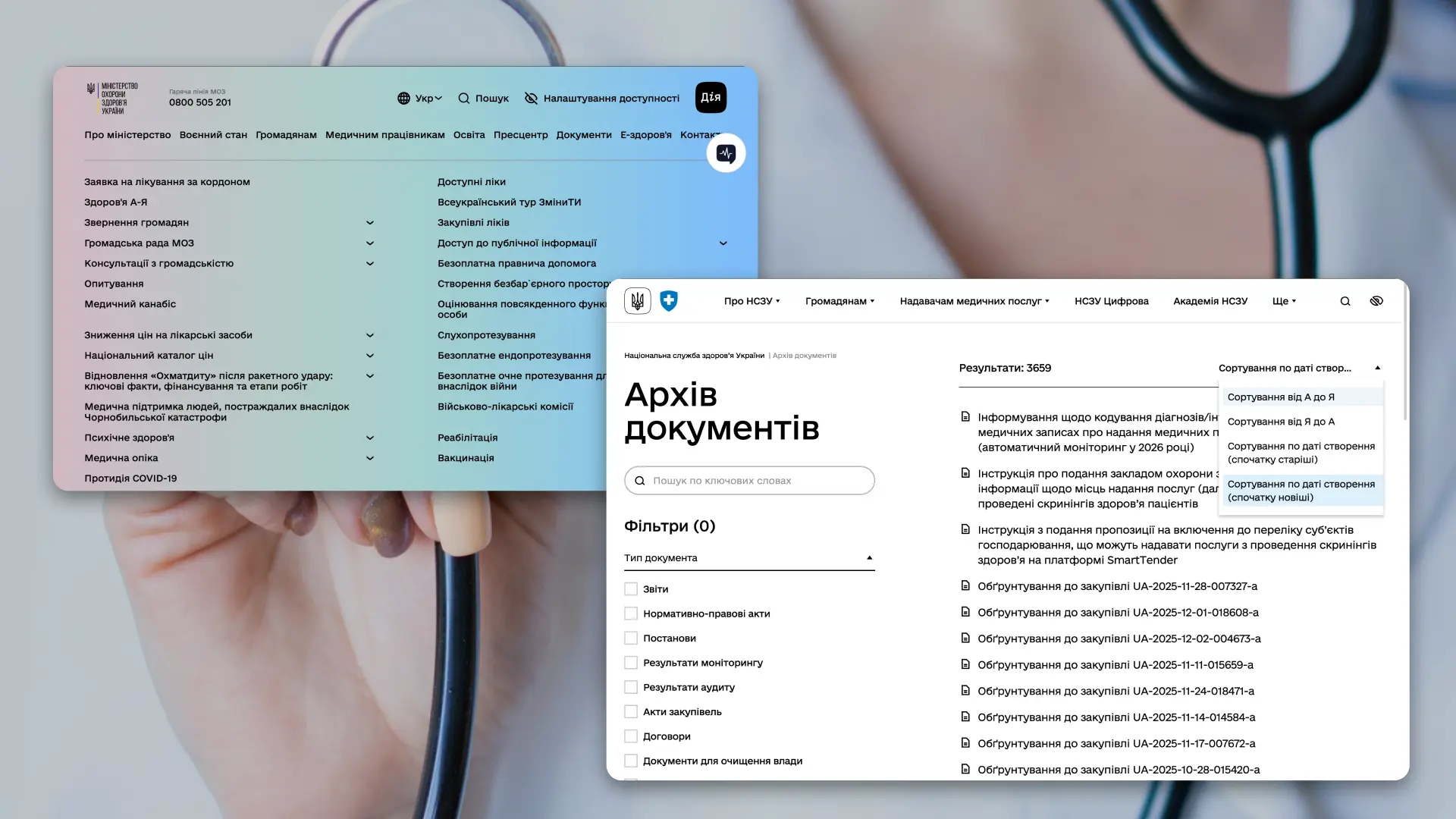
The NHSU works with numerous registries and up-to-date data. One of the main tasks of the project was to integrate this data directly into the website and make it usable day to day, with search, filters, and sorting built into clear user journeys.
LLack of accessibility
The website of a state institution had to be accessible to all users, including people with special needs. This was a fundamental requirement for the new product.
Designing ‘paths’ rather than pages
When designing the new website, the team focused on clear information architecture and task-based navigation. Content and navigation were structured to meet the needs of different target groups: patients, medical institutions, partners, and the media.
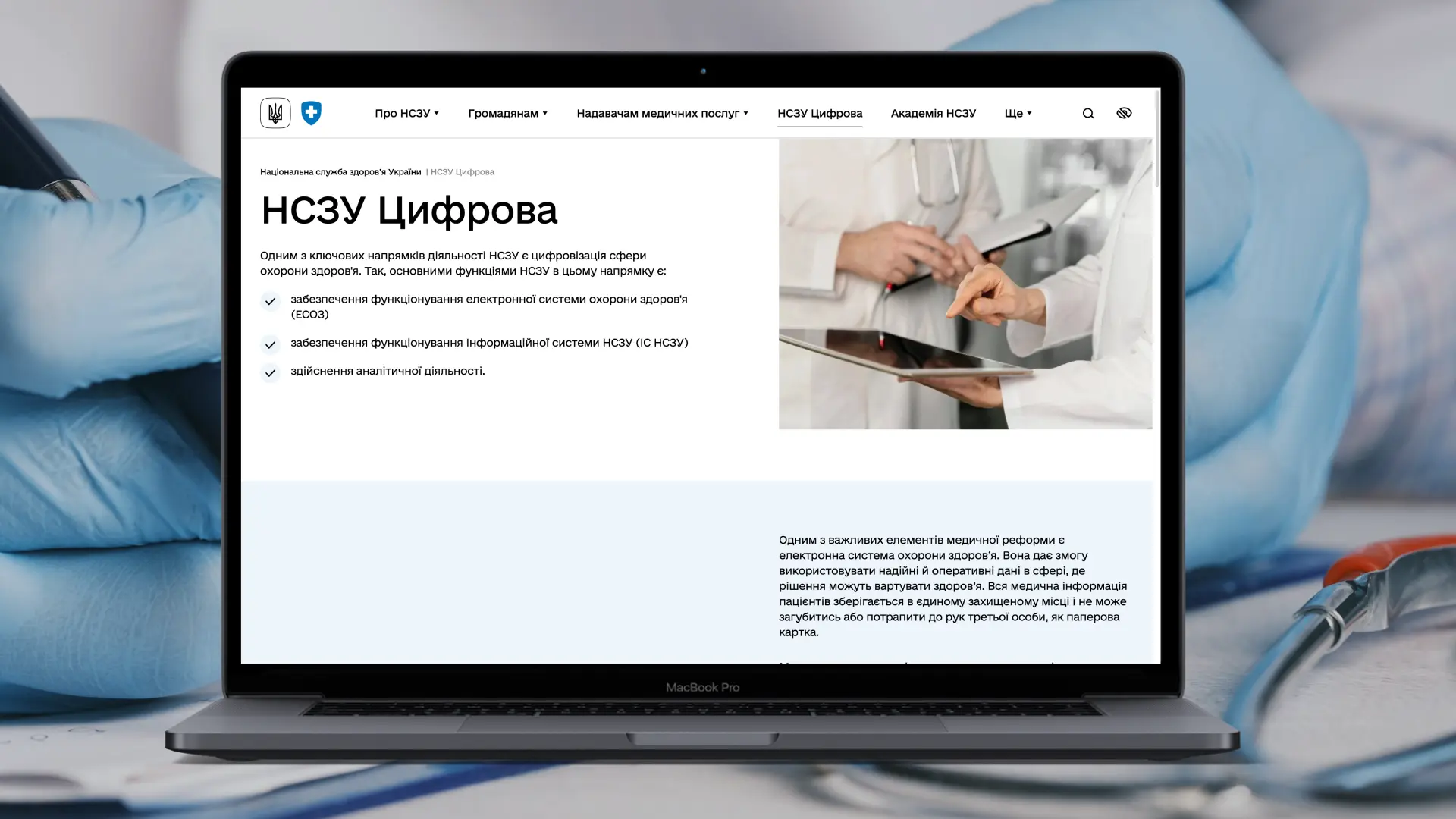
In the GovTech segment, we do not offer users the opportunity to ‘browse’ the site — we guide users directly to the solution to their problem. Patients are directed to the ‘Citizens’ section, while medical institutions are directed to the ‘Healthcare Providers’ section. This solution has shortened the path to the target action by streamlining the information structure.
Integration of registries into the user scenario
One of the key features of the project was the integration of data from registries and internal systems of the National Health Service of Ukraine directly into the website. Users can filter and sort information and quickly find medical institutions that have contracts with the the NHSU, or check which services are included in the medical guarantee programme, etc.
Inclusivity as a basic principle
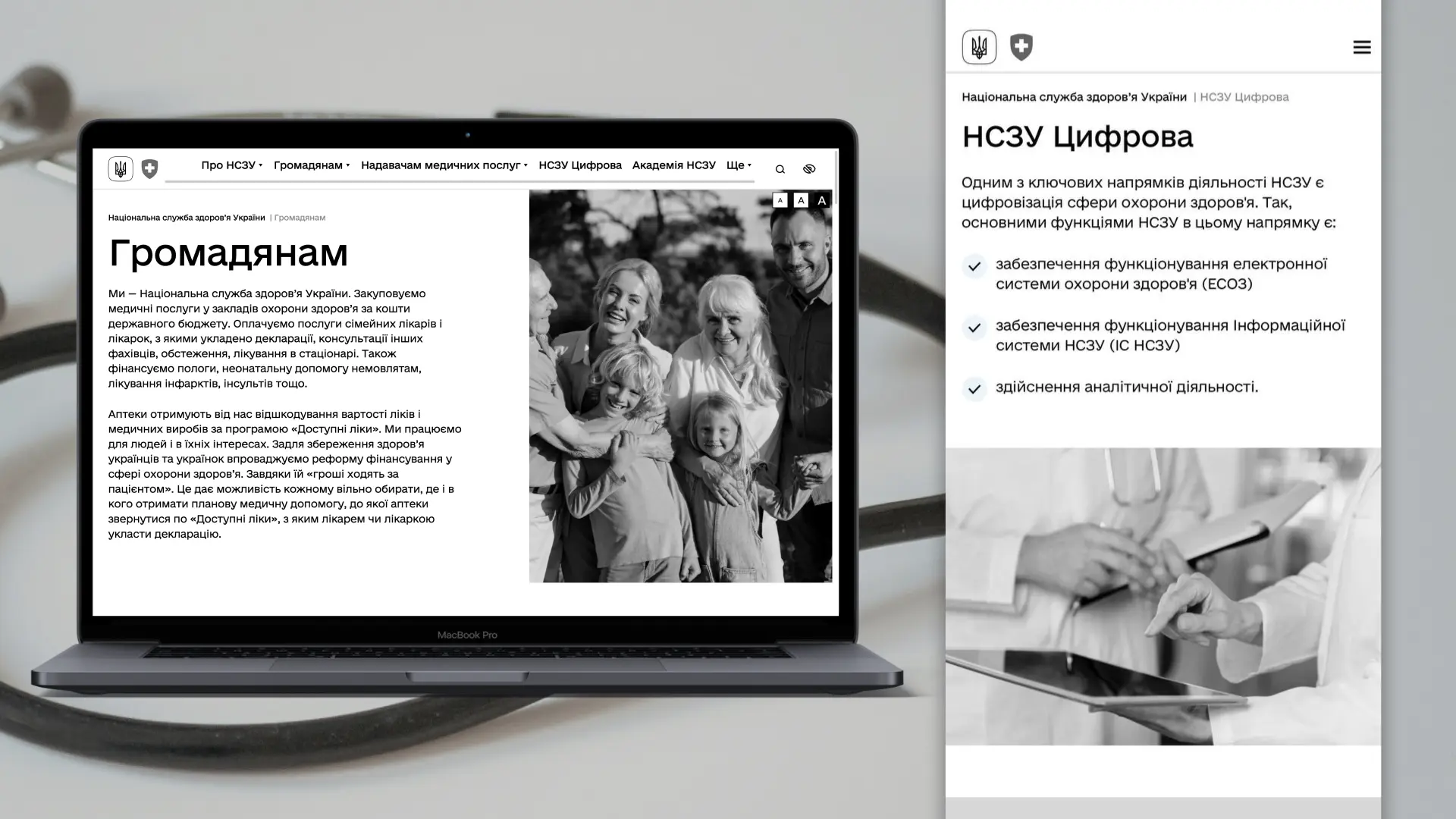
The new website complies with national accessibility standards. Inclusivity was built into the architecture and code, rather than as a separate feature. This made the resource comfortable for people with visual impairments and other users with special needs.
Social responsibility as a driver of development
Each element of the new website was checked for compliance with legislation and state standards of the Ministry of Digital Transformation. During the process, our team worked closely with the NHSU to ensure that digital solutions accurately reflected the logic of the institution's work and supported its communication tasks.
Result
We have created a digital ecosystem in which the state communicates with citizens in a language they understand. For the NHAU, this means reduced operational burden and increased transparency. For Ukrainians, it means confidence that medical care is available in just a few clicks.
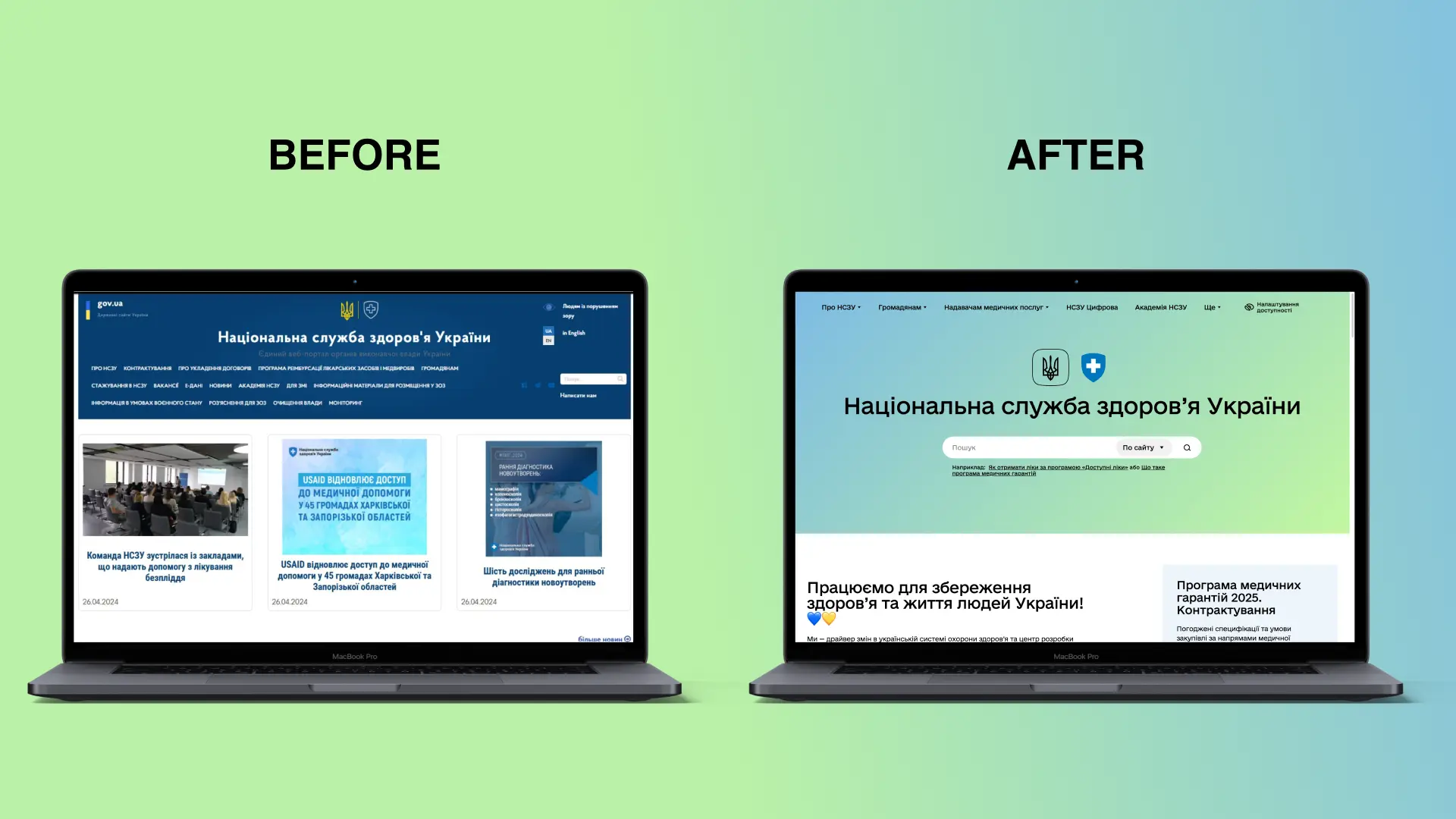
This case shows that a state digital resource can be not only functional, but also truly people-oriented — when complex processes remain invisible and the user gets a simple and understandable experience.
The website was created with financial support from the "100% LIFE" Charitable Organisation as part of the HealthLink project: ‘Accelerating HIV Response in Ukraine’ with support from the United States Agency for International Development (USAID).